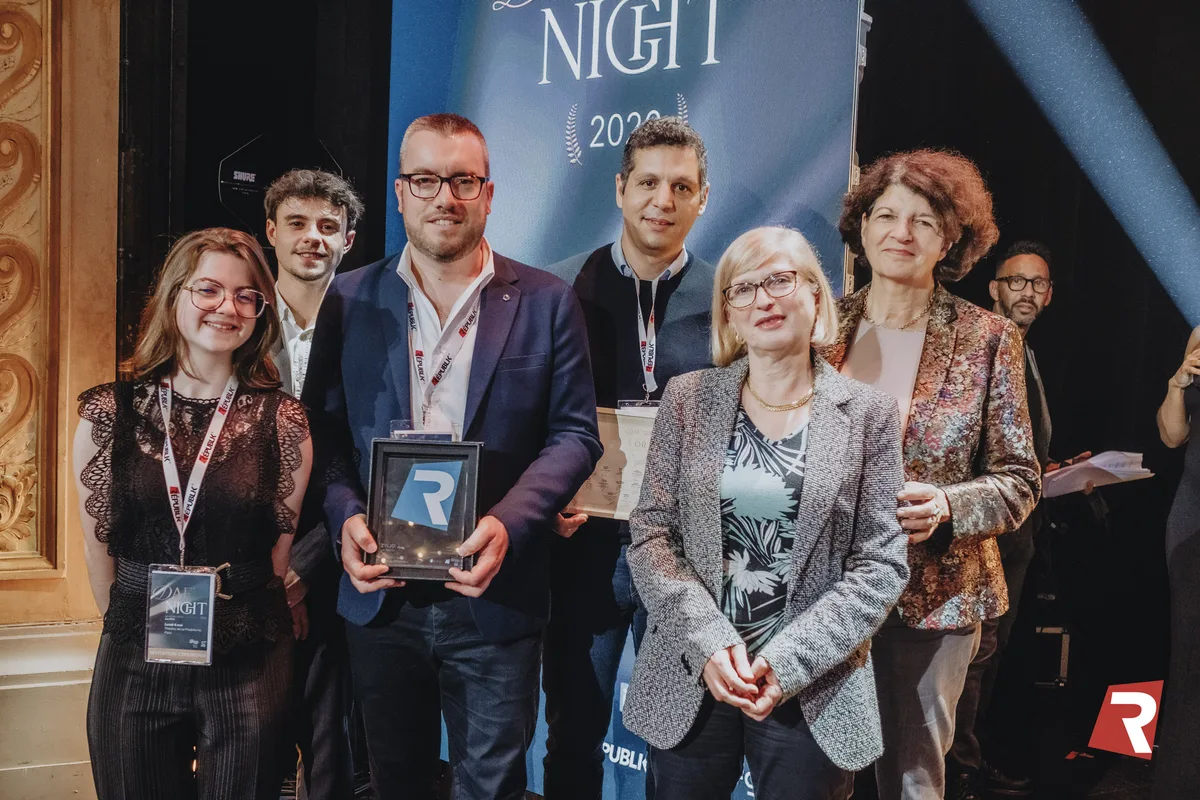
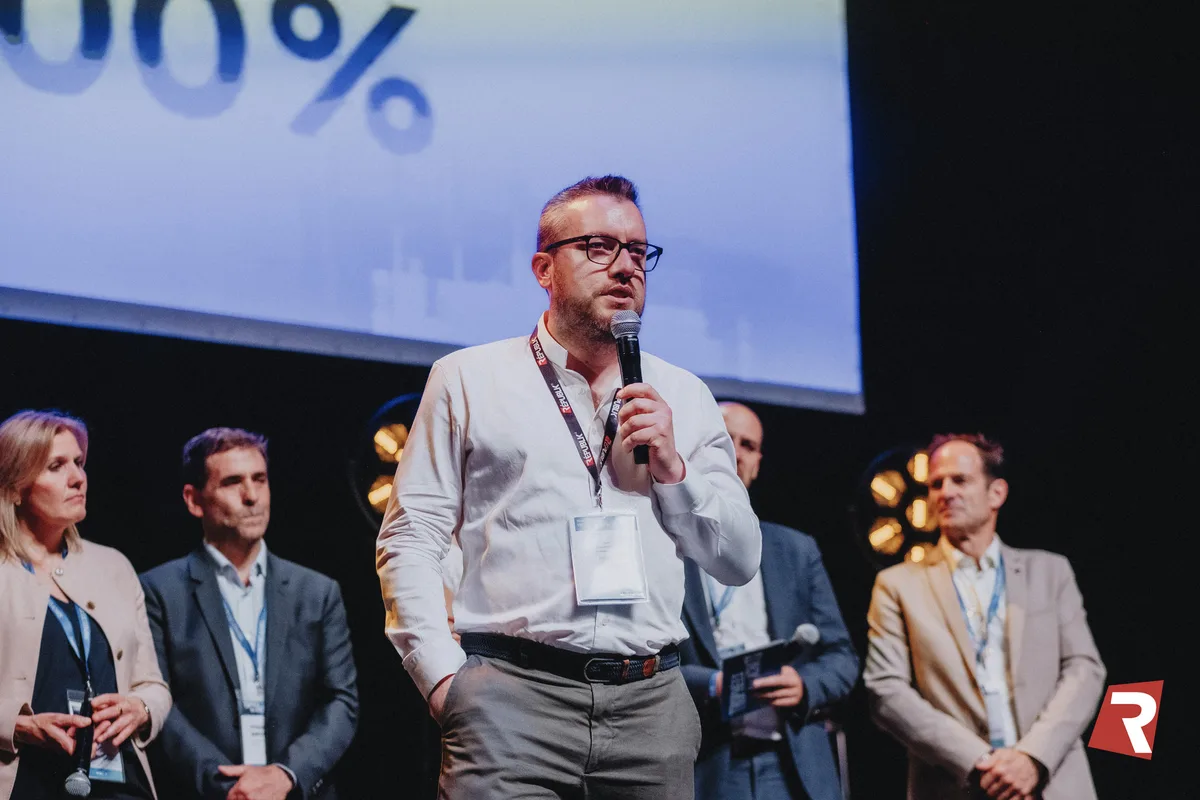
On Monday 22 June 2026, the Théâtre Mogador in Paris hosted the 19th edition of the Trophées des achats, the profession’s reference event since 2007, organised by Républik Achats. More than 1,000 procurement professionals in the room, the procurement leaders of France’s largest groups in the front rows, and on stage, providers there to defend their innovation before a jury of practising buyers.
That evening, in the innovative suppliers category, Zylio took second place, the silver medal, among the twelve finalists selected.
A recognition awarded by the people who live the problem
Being recognised in this category by that jury, among twelve finalists chosen after a demanding oral presentation, does not carry the same weight as a press ranking. The people who voted are the ones who receive the invoices, sign the framework contracts and answer for supplier spend. Their vote means that the problem Zylio addresses, document control in procurement, is recognised as real, as a priority, and as insufficiently solved by existing tools.
The field problem behind our application
Zylio was born from a simple observation, repeated across dozens of organisations in different sectors: procurement, finance and accounting teams devote a considerable share of their time to verification and comparison tasks that create, in themselves, no value.
Comparing quotes line by line in a spreadsheet. Checking that invoiced prices match negotiated terms. Verifying that delivered quantities are the ones invoiced. These tasks are essential, but nothing justifies keeping them manual.
When they stay manual, the consequences are predictable: partial control for lack of time, small recurring discrepancies never detected, and a silent contract leakage that nobody in the organisation really measures, because nobody has the time to reread every line against every clause.
What the jury assessed
The innovative suppliers category rewards providers able to bring a concrete answer to a procurement challenge. The jury does not score a technological promise: it looks at the mechanics of value. Which document is read? What is confronted with what? What proof does the buyer hold at the end?
We built our presentation on that mechanism. Where generative AI waits for an instruction (summarise a contract, draft a supplier email, produce a report), agentic AI works continuously. It reads, compares, detects and alerts across all documents, without a human having to handle the standard cases. It is this autonomy in preparing the case, not text generation, that turns an assistant into an operational lever.
What we showed on stage
Concretely, Zylio’s agents read every document format: free-form quotes, unit price schedules running to several hundred lines, DPGF, invoices, framework contracts, price lists. Capture extracts the decisive data without manual entry, keeping every value linked to the exact place where it was read. Compliance then confronts every invoiced line with the clause that governs it, and Matching reconciles invoice, order and receipt. When a discrepancy appears, the buyer sees the contract clause and the invoice line highlighted side by side, with the amount at stake.
We also told the jury what Zylio does not do. It does not touch the ERP: it reads what comes out of it. It commits nothing without approval. It contacts no supplier. It trains no model on its clients’ data. Zylio prepares the case; the buyer decides. That line, held since day one, counted as much as the technology in the assessment.
We presented no figure our clients would not have confirmed on their own documents. On the scopes we have analysed, recovered margin sits between 1 and 7% of the scope analysed: an observed bound, not a promised result.
What this second place says about procurement in 2026
Beyond Zylio, this podium confirms an underlying trend. The procurement function is no longer content with negotiating and controlling: it transforms, arbitrates and drives performance. But to play that strategic role, it still needs time and reliable data. That is precisely what automating document control frees up.
Every supplier document that is not checked is a potential discrepancy that will never be detected, a margin that will never be recovered. That some of France’s most committed procurement leaders placed this subject on the podium of the year’s innovations is no coincidence: document control has become a source of performance in its own right.
A silver medal, a few weeks after first place at DAF Night 2026, and above all confirmation that supplier data is the next competitiveness lever for procurement and finance leaders. You can read more about the team and the project, or, if the problem described here looks like yours, take twenty minutes with an expert to see what the control would yield on your documents.