
Contract leakage is the gap between what was negotiated and what is actually paid.
It can come from a rebate forgotten on an invoice, a price updated on the supplier’s side but not in your system, a unit price slightly above the one on the purchase order. Taken one by one, each discrepancy looks negligible. Added up over a month, over a year, across every supplier, they form a direct and silent loss of margin.
What makes contract leakage particularly insidious is that it appears in none of your usual reports. The ERP records what was entered and paid, not what should have been. So you believe the situation is under control, while points of margin slip away with every invoicing cycle.
This article explains where contract leakage comes from, which checkpoints to set on each purchasing document, and how to move from occasional checking to systematic control that protects your margins over time.
Understanding contract leakage: where does it come from?
The first thing to know is that it is rarely intentional. In the vast majority of cases it results from human error, from systems falling out of sync, or from contractual terms configured incorrectly, not from a deliberate intent to overbill.
The most frequent origins are the following. None of them requires bad faith; all of them require someone, or something, to be looking.
Entry errors on the supplier’s side. An operator applies the wrong price list, forgets a rebate line, rounds a quantity up. These errors are common at suppliers whose invoicing is still largely manual or semi-automated.
Price updates not passed through. Terms were renegotiated at the start of the year. But the supplier’s billing department was not told in time, or its system was not updated. The old price grids keep applying for weeks, sometimes months.
Rebates forgotten or misapplied. Volume rebates, year-end rebates, category rebates: these terms require active tracking of thresholds and application periods, which many suppliers do not manage in an automated way.
Specific terms configured incorrectly. Free delivery above a certain order value, particular packaging, non-standard payment terms. These terms are in the contract, but they are not always translated correctly into the supplier’s management systems.
Unintentional leakage or abusive billing: telling them apart
There is a second category, less comfortable to address: abusive billing. It covers cases where a supplier knowingly invoices terms that do not match what was negotiated, betting on the fact that you do not check systematically.
In practice, the line between repeated error and deliberate practice is not always easy to draw. What allows you to tell them apart is the frequency and the direction of the discrepancies: if errors always go the same way (in the supplier’s favour, never in yours), they deserve particular attention. That pattern only becomes visible when every invoice from that supplier is checked, not a sample.
The order of magnitude to keep in mind
On the scopes we have analysed, the recoverable gap sits between 1 and 7% of margin recovered on the scope analysed. The top of the range is not an expected result: it is an observed bound. But even the bottom of the range, set against an annual procurement budget, represents a sum nobody in the organisation sees going by.
The checkpoints to set on each purchasing document
Controlling contract leakage cannot be improvised. It rests on a simple principle: at each stage of the purchasing cycle, a document must be crossed with the previous one and with the reference contractual terms. The earlier the check, the cheaper the correction; the later, the more people it involves and the harder the money is to get back. Here is how to proceed, document by document.
On the quote: checking consistency before any commitment
The quote is the first checkpoint, and the one where intervening is easiest and cheapest: no financial commitment has been made yet, and the supplier has every reason to correct a line before losing the order.
What to check on every quote:
- Do the unit prices match the negotiated framework terms or the latest approved price list?
- Are the rebates applicable to this order (volume, category) included?
- Are the ancillary costs (transport, packaging, commissioning) in line with what was agreed?
- Do the quantities and units of measure match what was requested?
A quote not checked before approval becomes a problematic purchase order, then a disputed invoice. Correcting it at this stage takes a few minutes. Correcting it after invoicing takes several days.
On the purchase order: the last safety net before commitment
The purchase order embodies your commitment. It must be the exact transcription of what was negotiated, not an approximate manual entry.
What to check on every purchase order:
- Do the unit prices entered match the approved quote and the contractual terms?
- Do the quantities ordered trigger a volume rebate? If so, is it shown?
- Are the delivery terms (lead times, incoterms, delivery charges) in line with the contract?
- Does the purchase order reference the right contract or framework agreement number?
This checkpoint is often neglected, because it requires crossing several sources at once: the contract, the quote, the price history. That is precisely the complexity that makes it hard to sustain manually at scale.
On the invoice: the final and most critical checkpoint
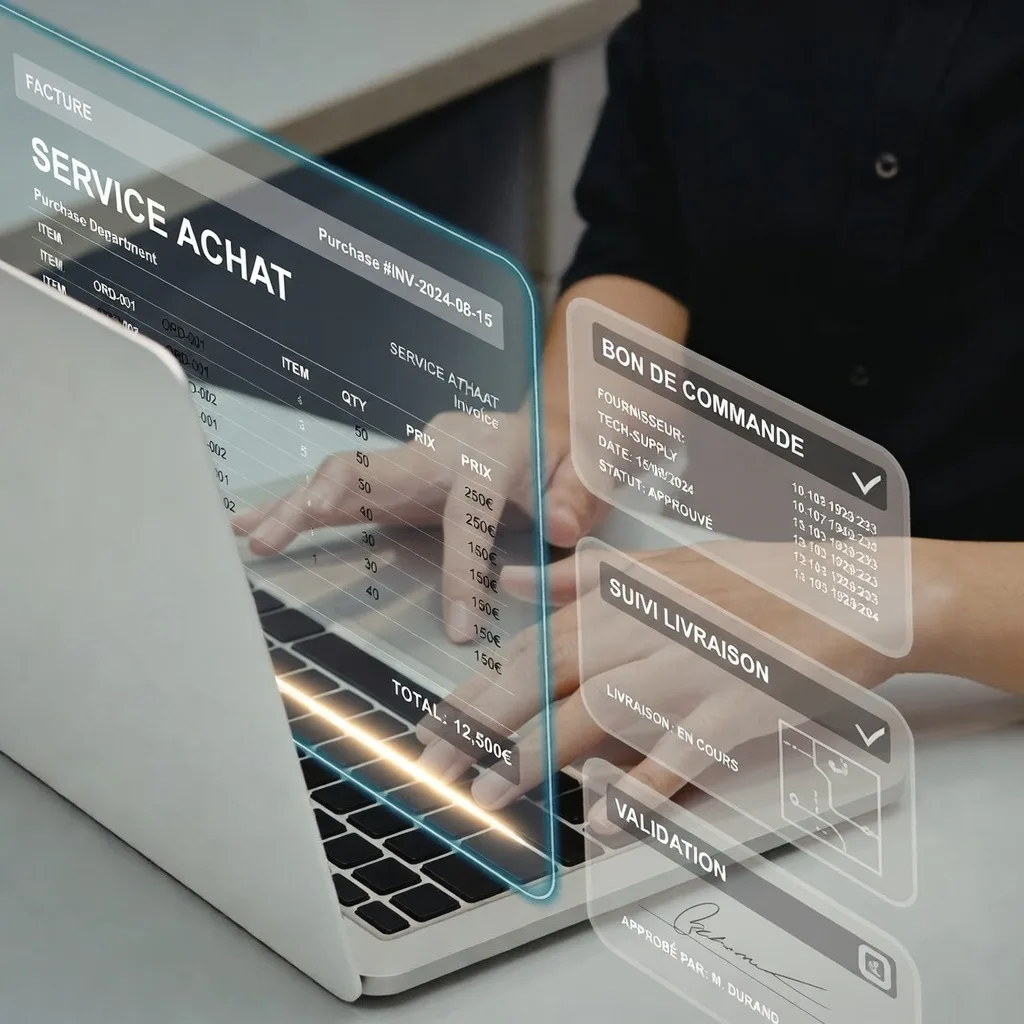
The invoice is the document on which contract leakage materialises financially. It is where the gap between what was negotiated and what is actually claimed becomes visible, provided you have the means to see it.
What to check on every invoice:
- Do the invoiced prices match the purchase order?
- Do the invoiced quantities match the quantities actually delivered, according to the delivery note?
- Are the rebates shown on the purchase order applied on the invoice?
- Are the payment terms (due dates, any early-payment discounts) in line with the contract?
- Are there additional lines (fees, services) that were not planned?
This three-document match (purchase order, delivery note, invoice) is what accounting calls three-way matching. It is the standard of control. Yet in most organisations it is still done by hand, and therefore by sampling.
Moving from occasional checking to systematic control
Why manual checking is no longer enough beyond a certain volume
Occasionally checking a few strategic invoices is already good practice. But beyond a certain volume (a few dozen invoices a month, several active suppliers, complex pricing terms), manual checking becomes a sink for time, and the team quietly stops doing it.
Handling an anomaly by hand means detecting it, verifying it against the contract, exchanging with the supplier, obtaining the correction, chasing. Multiplied by the monthly volume of anomalies, the human cost of manual checking often exceeds the value of the discrepancies it recovers. That is why checking stops, not because the discrepancies have gone away.
Manual checking has another structural flaw: it is selective. You check the large invoices, the strategic suppliers, the quiet periods. You let through the small recurring discrepancies, the secondary suppliers, the busy month-ends. That is exactly where contract leakage thrives.
How to structure a regular control process
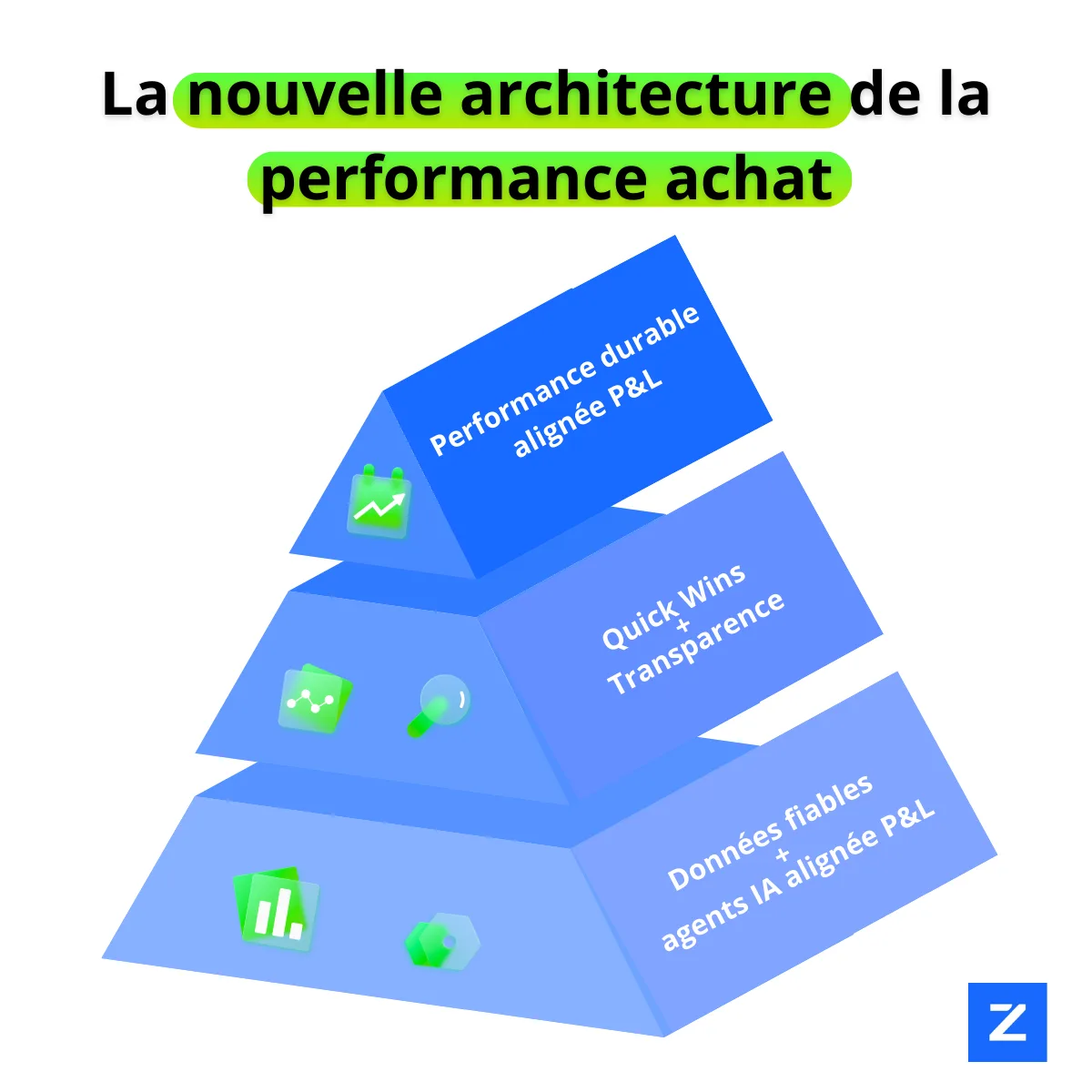
Systematic control does not mean automating everything at once. It means first structuring the method, then identifying where automation brings the most. An organisation that automates a control it has never defined simply produces noise faster.
The four steps of a structured control process, in the order they should be built:
- Centralise contractual terms in a single, up-to-date reference: for each supplier, one document that is authoritative in case of a discrepancy.
- Define alert thresholds: below which amount you accept the margin of error, above which you trigger a systematic check.
- Standardise exchanges with suppliers for correction requests: a clear process, defined deadlines, documented traceability.
- Measure regularly the anomaly rate per supplier and per category: that tracking is what reveals structurally problematic suppliers.
The role of automation: handling the volume without burdening the teams
Automating document control answers a simple question: how do you check several hundred invoices a month with the same rigour as a single one, without multiplying headcount?
An AI agent dedicated to the compliance of invoiced prices with negotiated prices crosses each invoice with the purchase order and the reference contractual terms: framework contract, unit price schedule, price list, rate grid, amendment. It detects discrepancies line by line (prices, quantities, rebates, charges) and produces a list of anomalies ranked by amount and by supplier, each discrepancy linked to the clause and the line it comes from. What took hours on a complex invoice is prepared continuously. And above all, no invoice goes through unchecked, whatever its amount.
The agent prepares the case; your team decides. It changes nothing in the ERP, contacts no supplier and raises no claim: it gives you the file to do so.
What it changes over twelve months
For an organisation that used to check by sampling, moving from 5% to 100% of purchases checked changes the nature of the exercise. Discrepancies are no longer discovered at audit, months after payment, but before payment, when a credit note is still easy to obtain. And the margin recovered comes without renegotiation, without straining the supplier relationship, without new budget: simply by having what was already negotiated applied.
What to remember
Contract leakage does not show in your dashboards. It only reveals itself when the right checkpoints are in place: on the quote before any commitment, on the purchase order before execution, on the invoice before payment.
These three levels form a simple, actionable method. Structuring it takes time. Automating it lets you sustain it over time, whatever the volume, and turns a control that depended on one attentive person into one that no longer depends on anyone being available at month-end.
For organisations that want to know precisely where their contract leakage sits before investing in a full process, the most direct way is to test the control on a real sample of documents: that is the purpose of our three-week diagnostic, on your data.