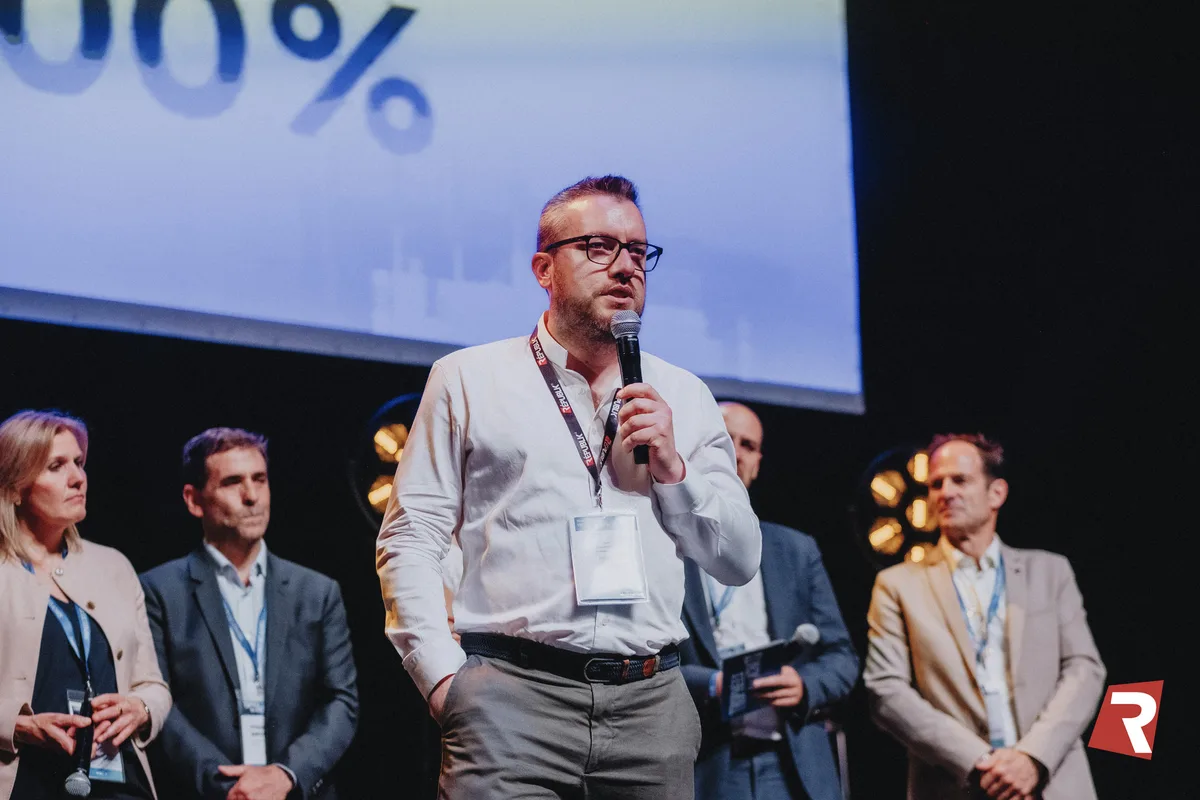
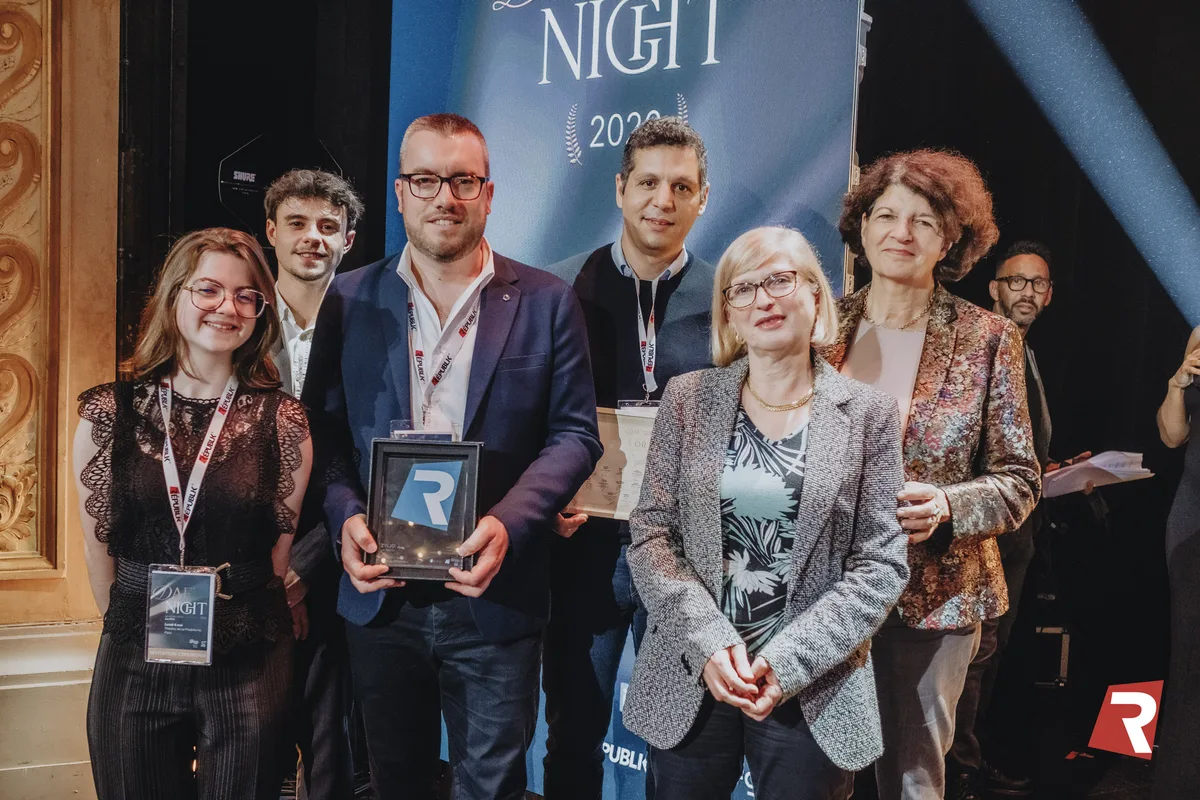
On Monday 4 May 2026, the Théâtre de la Madeleine in Paris hosted the DAF Night, the CFO night organised by Républik Finance in partnership with DFCG Île-de-France. In the room, the finance leadership of France’s large groups. On stage, finalists who had pitched a few weeks earlier before a jury of 25 CFOs from groups such as GE HealthCare, Sodexo, Thales, The Coca-Cola Company, and from the DFCG.
That evening, Zylio won the trophy in the Cash, Capital & Efficiency category.
What the DAF Night says about finance leaders’ priorities in 2026
An event judged by peers
The DAF Night is an event rooted in the finance community. Organised with DFCG Île-de-France, which brings together nearly 1,300 corporate finance members in the Paris region, it has one particularity: applications are evaluated by CFOs in office, not by investors or specialist journalists.
A trophy awarded by peers who face the same constraints, the same responsibilities and the same closings as our customers does not carry the same weight as a generalist prize. The jury does not judge a technological promise; it judges whether the problem is real and whether the answer holds up inside a finance department.
The process ran in three stages: application deadline on 20 March, oral presentation before the jury on 2 April, then the trophy ceremony on 4 May at the Théâtre de la Madeleine. Eight categories were recognised:
- Digital Transformation & Intelligence;
- Performance & Innovation;
- Cash, Capital & Efficiency;
- Risk, Compliance & Cyber;
- CSR & Impact;
- as well as Female CFO, CFO on a Mission, Future CFO and CFO under LBO.
The CFO of 2026 is no longer a manager, but a decision-maker
The evening highlighted a repositioning of the function. The DAF Night programme summed it up: “CFOs no longer simply secure figures. They transform, arbitrate, structure, innovate, take risks.”
To play that role, you need time and data. Yet a share of finance teams’ time goes into document checks nobody should be doing by hand. That is precisely what automated control frees up, and it is the thesis we defended before the jury.
Why document control has become the finance department’s issue
The observation that motivated our application
Zylio was born from an observation repeated across dozens of companies: procurement and finance teams spend a considerable share of their time checking and comparing documents, without those tasks creating value in themselves. Comparing quotes line by line in a spreadsheet. Checking that invoiced prices match negotiated conditions. Verifying that delivered quantities are the ones invoiced.
These tasks are essential. They do not need to be manual. When they remain so, the consequences are predictable: partial control for lack of time, small recurring variances never detected, silent contract leakage. On the scopes we have analysed, the recoverable gap sits between 1 and 7% of margin on the scope analysed, without anyone in the organisation being aware of it before looking.
Why generative AI is not enough, and what agentic AI changes
Generative AI has opened real uses for finance departments: summarising a contract, drafting a supplier letter, producing a report. But these uses are reactive. The model waits to be asked for something.
Agentic AI works differently. It does not wait. It reads every document that arrives, confronts it with the contract, the order and the receipt that concern it, detects the variance and presents it with its proof: the clause and the invoice line highlighted side by side. Compliant cases go through; cases with a variance are escalated to a person, who decides. That distinction, preparing the case continuously without ever deciding in the team’s place, was at the heart of our submission. Our page on n-way matching details what the agent confronts with what.
What the analysed scopes show
We did not present model projections to the jury. We presented what is observed on our customers’ documents, in their sectors, on the scopes they chose: from 5% to 100% of purchases controlled depending on the scope entrusted, between 1 and 7% of margin recovered on the scope analysed, and 15 to 45% of time returned to teams, per FTE, depending on scope and data maturity. The top of these ranges is never an expected result: it is an observed bound, and every variance is documented back to its source.
What this recognition changes
A validation that goes beyond Zylio
Winning a trophy awarded by CFOs in office, before a jury from groups such as Sodexo, Thales or GE HealthCare, first validates that the problem is real and recognised by peers. That French finance departments are ready to act on the automation of document control. That agentic AI applied to procurement is no longer a conference topic, but an operational lever a finance department can put in the budget.
For our current customers, this recognition confirms that their choice was judged sound by their peers. For us, it sets a requirement: that every analysis remain visible, sourced and exportable, because that is what the jury evaluated us on.
What to remember
The DAF Night 2026 did not reward a technological promise. It rewarded a concrete answer to a problem recognised by France’s most committed finance departments: teams overwhelmed by a growing volume of documents, margin slipping away in silence, time swallowed by tasks that should no longer be manual. That problem is not specific to a few companies. It is structural, and it worsens with growth.
If you want to know what your own invoices would say, a 3-week diagnostic on your data shows it, on a scope you choose.