One evening, one conviction
When margins tighten, the procurement function becomes a lever that general management watches closely. Hence the Club Planète Sourcing dinner debate of 17 February, organised by Républik Achats and sponsored by Zylio.
The evening brought together 21 procurement directors around Olivier Philippot, Chief Procurement Officer at Vallourec, with one common thread: performance cannot be decreed, it is built in the balance between immediate results and a trajectory that holds over time. Three structuring ideas came out of it.
Quick wins only have value with a course and a P&L
Cutting a cost quickly, correcting an inefficiency, recovering an invoicing variance: these fast actions are useful, on one condition. They must belong to a common thread and be readable in the income statement. A gain that does not show up in the P&L remains an intention.
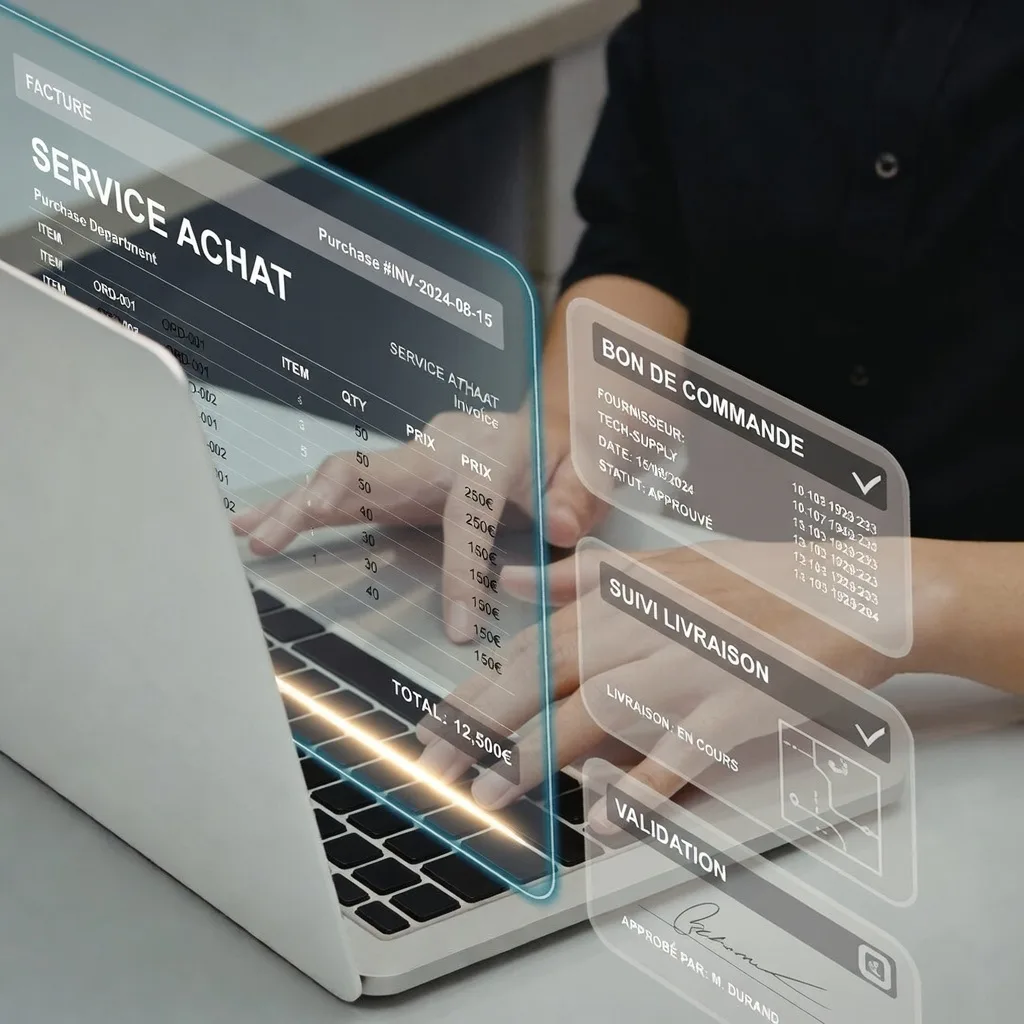
That anchoring assumes you know precisely where the variances sit: which supplier, which line, which contract. This is where automated control makes sense: reading every invoice, comparing it with the contract that governs it, and showing the variance with the proof. It is what our page on compliance with your negotiated prices describes.
Cost pressure or supplier relationship: the false dilemma
Many buyers feel they have to choose between squeezing costs and preserving the relationship with their suppliers. The debate showed the alternative is false. As the Républik Achats article on the evening puts it, “a power dynamic excludes neither loyalty nor a shared horizon”.
Olivier Philippot phrased it differently: “transparency pays”. Honouring commitments, negotiating give-and-take, explaining why an effort is being asked for: these practices strengthen trust. A supplier whose invoices are checked line by line, each variance presented with the supporting document, works within a clearer framework, not a more hostile one.
Performance runs through internal leadership
Before performing outwards, you have to manage inwards. Participants described two factors:
- Placing talent where it excels, in its area of competence and preference.
- Convincing and engaging the other functions, and securing the budget that goes with it.
The second is the heavier one. A procurement department that has not brought finance and general management on board sees its quick wins contested and its P&L argued over. The most effective argument remains a proof: a real, dated, documented variance, on a supplier everyone knows.
The architecture of procurement performance today
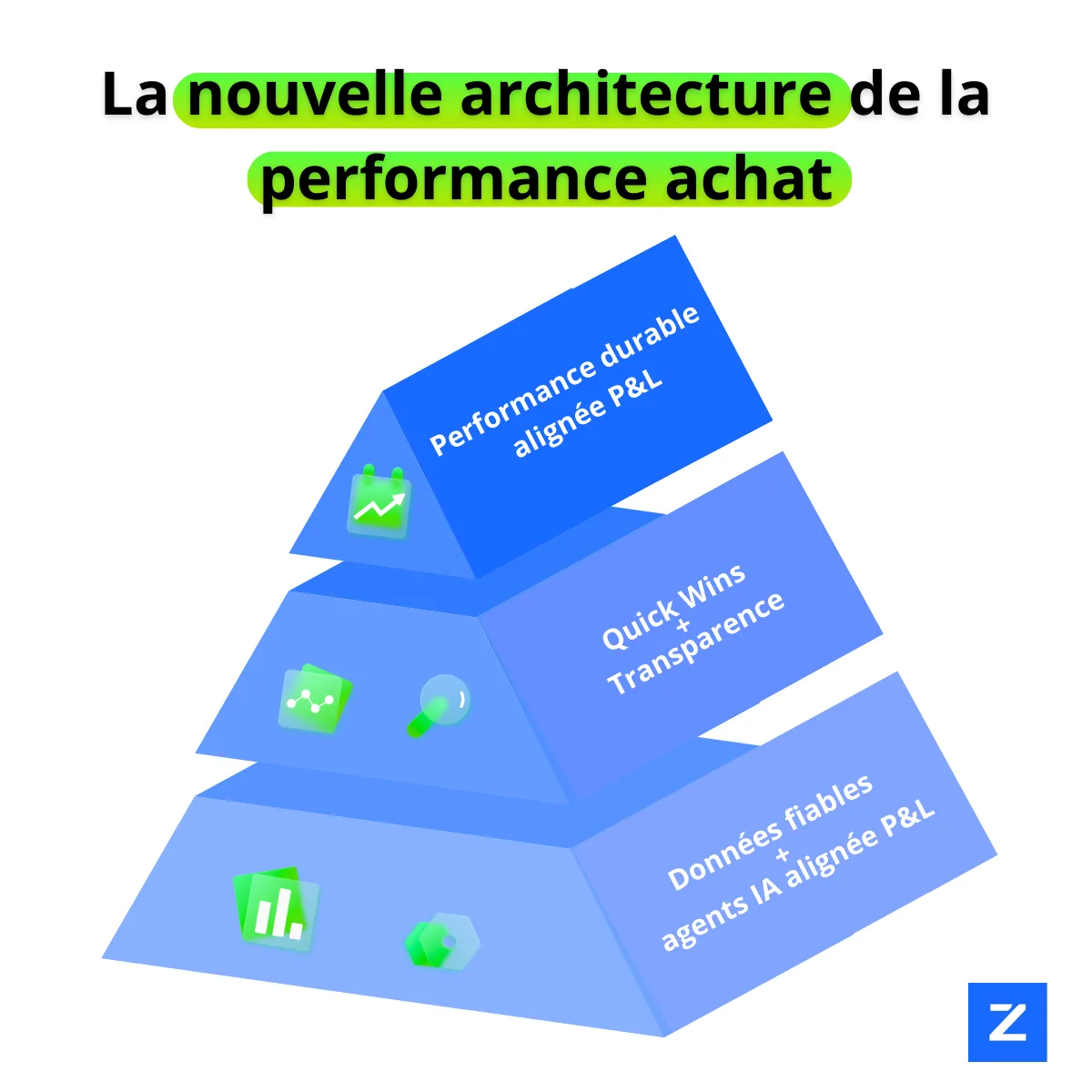
The discussion sketched a layered architecture. At the base, reliable data: a clean supplier master, usable contracts, a price history. Above it, automated control of the variances between what was negotiated and what is invoiced. Then ERP integration, so that conclusions arrive where teams already work. At the top, what only a team can do: strategy, negotiation, the supplier relationship.
In this architecture, AI agents do not replace procurement and finance teams. They augment them: they read the documents, match the lines, detect anomalies and make variances visible with their proof. Teams get time back (15 to 45% of time returned to teams, per FTE, depending on scope and data maturity) and spend it on what requires their judgement. Our AI agents page describes what each one reads and checks; ERP integration modifies nothing in the existing system.
What Zylio takes from it
By sponsoring this evening, Zylio wanted to share a conviction the discussion confirmed: procurement performance is built on fast, measurable actions tied to financial stakes. Preparing every variance with its proof, and letting the buyer decide, is our way of contributing.
If you want to measure what your own data would say on a scope of your choosing, a 3-week diagnostic on your data is the most direct way to find out.